-
Subscribe
Subscribed
Have a WordPress.com account? Log in now.
Selected Professional Achievements
Throughout my career, I have contributed to initiatives spanning healthcare quality management, regulatory compliance, clinical research, public policy, and international development. These achievements reflect a longstanding commitment to strengthening organizational systems, improving accountability, and translating strategic objectives into meaningful and sustainable outcomes.
Kensington Health Eye Bank of Canada (Ontario Division)
Development, Implementation and Ongoing Management of a Standards-Based Quality Management System | 2017–Present
Among my most significant professional achievements has been the development and continued advancement of the Quality Management System (QMS) at the Eye Bank of Canada (Ontario Division), Canada’s largest eye bank and one of the largest in North America.
Over nearly a decade with the organization, I have played a central role in establishing, strengthening, and maintaining a comprehensive, standards-based QMS within a highly regulated healthcare environment. This work began with the consolidation and modernization of existing quality assurance processes into an integrated framework designed to support regulatory compliance, accreditation readiness, operational consistency, and continuous quality improvement.
Key contributions have included the comprehensive review and enhancement of Standard Operating Procedures, modernization of the internal audit program, strengthening of quality reporting and oversight mechanisms, and transition from paper-based documentation to a more comprehensive electronic records management system.
Beyond its initial development, my responsibilities have evolved to encompass the ongoing management and refinement of the QMS, including regulatory compliance oversight, quality assurance, risk management, corrective and preventive action processes, and the identification and implementation of opportunities for systemic improvement.
This achievement represents not simply the development of a quality management framework, but nearly ten years of sustained responsibility for its effectiveness, integrity, and continued evolution in support of patient safety and organizational excellence.
Merita CQA Inc. (a subsidiary of ethica Clinical Research Inc.)
Successful Third-Party Quality Audit and Business Development Outcome
During my tenure at Merita CQA Inc., I played an important role in preparing for and facilitating a significant third-party quality audit conducted by one of Canada’s leading pharmaceutical companies.
The audit involved extensive preparation, coordination, and collaboration to demonstrate the organization’s adherence to applicable quality standards and client expectations. The successful outcome, with no formal inspection observations, contributed to the award of a contract valued at more than $1 million to ethica CRO Inc.
This accomplishment demonstrated the strategic importance of a well-managed quality assurance program, both in providing assurances of regulatory compliance and in supporting organizational credibility and business development.
The experience was also an important milestone in my professional development under the leadership of Dr. Janice Parente.
Clinical Trials Ontario
Development of the Research Ethics Board Qualification Manual
Working under the direction of Susan Marlin, I led the development of the Research Ethics Board (REB) Qualification Manual for Clinical Trials Ontario.
The manual was designed to support the systematic assessment of research ethics boards against established regulatory and operational requirements, providing a structured approach to determining eligibility for participation in Ontario’s streamlined research ethics review system.
This initiative contributed to broader efforts to strengthen consistency, accountability, and efficiency in research ethics oversight across Ontario.
My involvement drew upon principles of regulatory auditing, quality assurance, and research participant protection, reflecting the important relationship between ethical oversight and effective quality management in clinical research.
Supporting document: Research Ethics Board Qualification Manual
Mount Sinai Hospital
MOVE ON Initiative — Evidence-Based Quality Improvement in Patient Mobilization
At Mount Sinai Hospital, I contributed to the Mobilization of Vulnerable Elders in Ontario (MOVE ON) initiative, a multisite, evidence-based implementation project aimed at promoting early mobilization and reducing functional decline among hospitalized older adults.
My responsibilities included conducting systematic, regularly scheduled audits of patient rooms and care environments to assess mobilization practices and support the evaluation of changes resulting from the intervention.
The project brought together clinical practice, implementation science, and quality improvement to address an important patient safety and health outcomes challenge in acute care.
The initiative subsequently generated several peer-reviewed publications examining its implementation, barriers to practice change, and patient mobilization outcomes.
Selected publications:
Liu et al. (2013). Evaluation of a multisite educational intervention to improve mobilization of older patients in hospital: Protocol for Mobilization of Vulnerable Elders in Ontario (MOVE ON). Implementation Science.
Moore et al. (2014). Mapping barriers and intervention activities to behaviour change theory for Mobilization of Vulnerable Elders in Ontario (MOVE ON). Implementation Science.
Liu et al. (2017). Outcomes of Mobilisation of Vulnerable Elders in Ontario (MOVE ON): A multisite interrupted time series evaluation of an implementation intervention to increase patient mobilisation. Age and Ageing.
Office of the Member of Parliament for Don Valley West
Public Policy Development — Liberal Multiculturalism in the 21st Century
During my involvement with the office of Member of Parliament Rob Oliphant and the Don Valley West Federal Liberal Riding Association, I contributed to local political engagement and public policy discussions.
As a member of the riding association’s Policy Committee, I authored and presented a discussion paper examining Liberal Multiculturalism in the 21st Century.
The paper explored questions surrounding multiculturalism and public policy, contributing to broader discussions about Canadian identity, pluralism, and the evolving role of multiculturalism in contemporary society.
This work reflected my academic background in social and political ethics and my interest in translating philosophical and policy analysis into practical political discourse.
Supporting document: Liberal Multiculturalism in the 21st Century
United Nations Millennium Campaign — Asia and the Pacific
Development and Implementation of the iMDG Regional Youth Engagement Initiative
One of my most distinctive international development achievements was leading the development and implementation of the iMDG pilot initiative for the United Nations Millennium Campaign in Asia and the Pacific.
The initiative sought to strengthen youth participation in the Millennium Development Goals through an innovative combination of digital engagement, social media, and community-based advocacy.
I developed and implemented an online youth communications strategy that connected participants across multiple countries, creating opportunities for young people to engage in development issues and participate in coordinated advocacy activities.
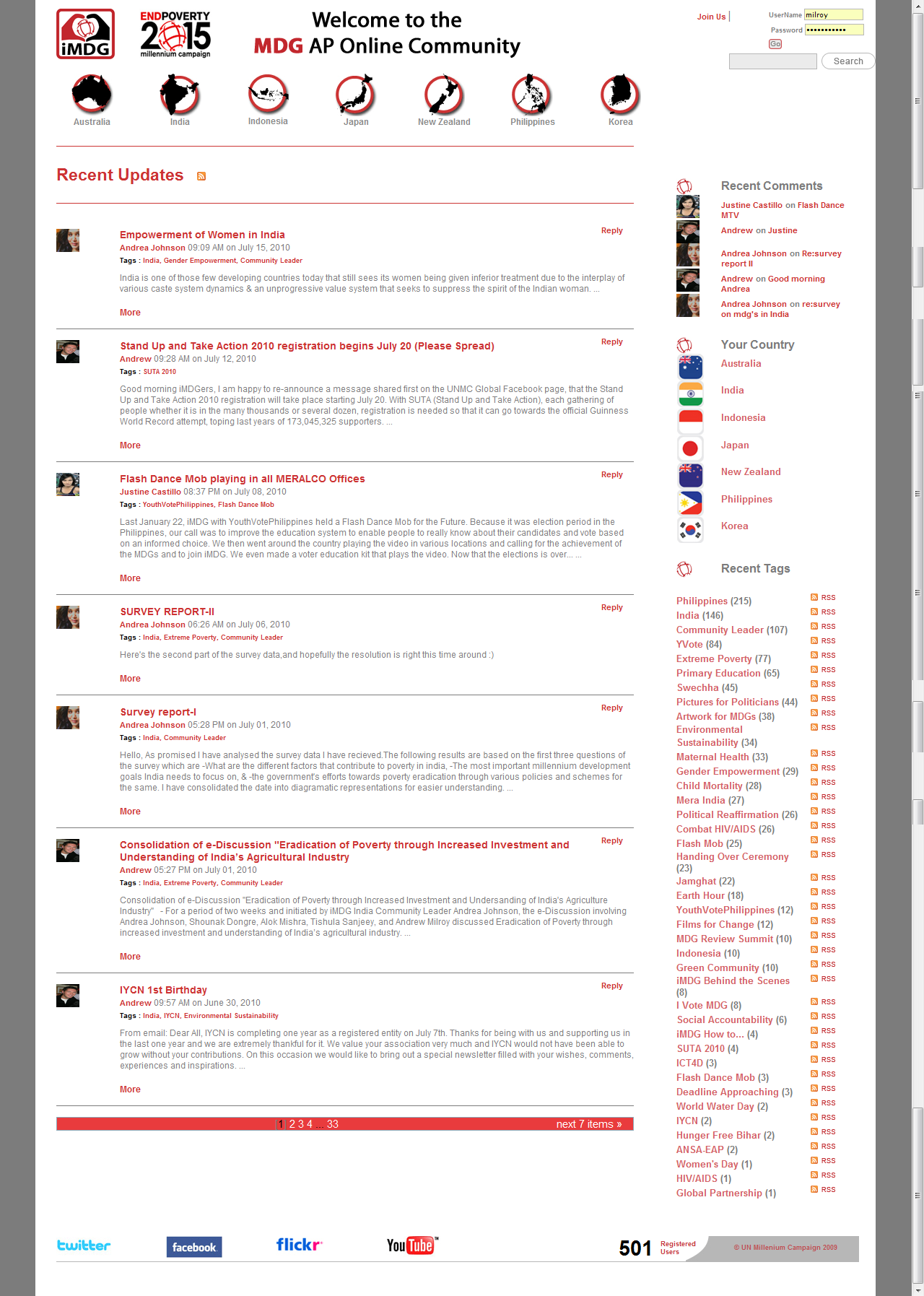
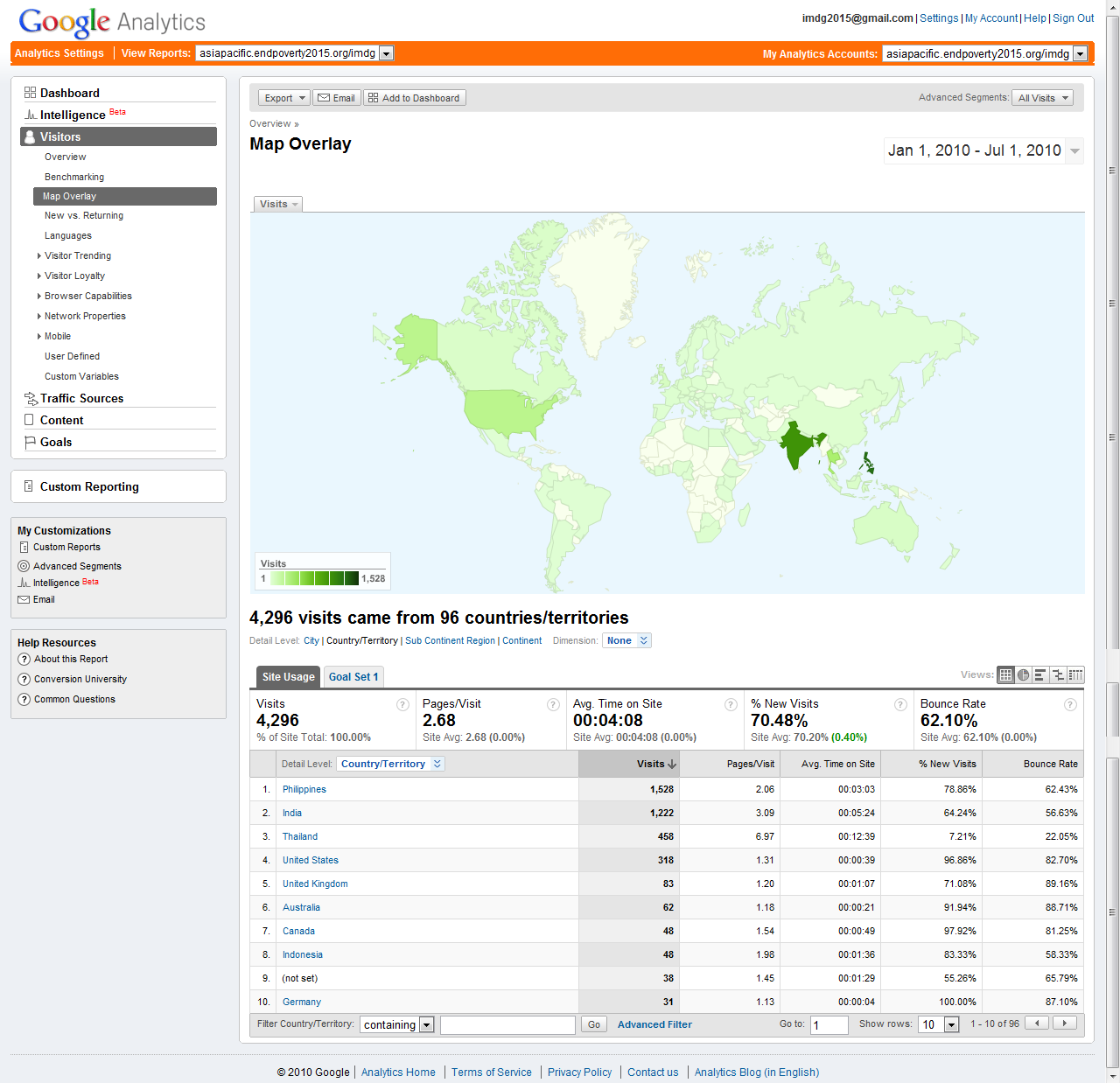
Piloted in India, the Philippines, and Indonesia, the project established an online youth community that supported local activities and the creation of multimedia petitions presented to senior political officials in the participating countries.
The initiative attracted national media coverage, including reporting in The Hindu in India and the Philippine Daily Inquirer, demonstrating its reach and public engagement.
Following the pilot, I authored Establishing an Online Youth Community — Case Example: iMDG, a practical primer drawing upon the project’s implementation experience and initial evaluation.
The initiative remains a significant example of my ability to design and implement an international, multi-stakeholder project combining strategic communications, technology, public participation, and development advocacy.
Supporting materials: Media coverage, project primer, Phase 1 Final Assessment, iMDG webspace, Google Analytics, and project video.
United Nations Development Programme — Regional Centre in Bangkok
Capacity Development, Knowledge Sharing and Organizational Learning
During my time with the Capacity Development Team at the United Nations Development Programme’s Regional Centre in Bangkok, I contributed to initiatives designed to strengthen organizational learning, knowledge exchange, and professional capacity across the region.
A particularly meaningful achievement was spearheading the Capacity Development Brown Bag Lunch Series, an internal knowledge-sharing initiative intended to facilitate discussion, promote innovative approaches, and encourage the exchange of ideas among colleagues.
The series provided a forum for exploring emerging practices and strategic questions related to capacity development, including the evolving role of digital communications and participatory technologies in organizational work.
My contributions included conceptualizing and coordinating the initiative, developing supporting materials, and facilitating opportunities for knowledge exchange.
This work reflected my broader interest in organizational effectiveness, collaborative learning, and the role of effective communications in supporting institutional development.
Supporting materials: Web 2.0 presentation flyer, Staff Participation and Web 2.0 briefing, and Capacity Development Talk Series materials.